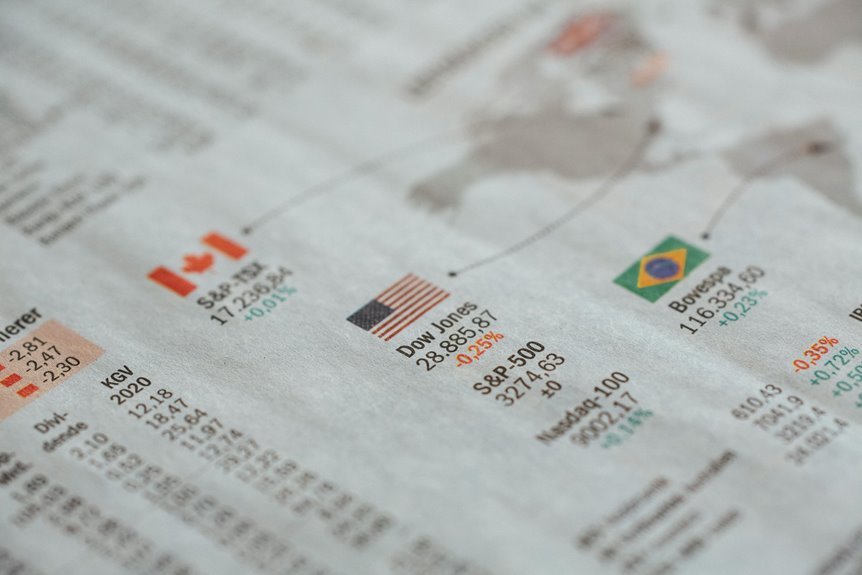
Did you know that the stock market has seen a 15% fluctuation in just the past quarter? This volatility reflects shifting investor sentiment and highlights the importance of keeping an eye on key economic indicators. With geopolitical tensions and supply chain disruptions at play, your investment strategies may need to adapt. What should you consider next to safeguard your portfolio in these unpredictable times?
Current Stock Market Trends
As the market fluctuates in response to economic indicators, you’re likely noticing a shift in stock trends that reflects broader investor sentiment.
Market volatility has intensified, impacting sector performance across the board.
Technology and consumer discretionary stocks often lead during bullish phases, while defensive sectors gain traction in downturns.
Understanding these dynamics helps you navigate the ever-changing landscape and make informed investment decisions.
Economic Indicators to Watch
While economic indicators can seem overwhelming, keeping an eye on a few key metrics can significantly enhance your investment strategy.
Focus on unemployment rates, as they reflect economic health and consumer spending power.
Additionally, monitor inflation expectations, which can signal changes in purchasing power and interest rates.
Staying informed on these indicators empowers you to make more strategic and freedom-oriented investment choices.
Impact of Global Events on U.S. Economy
Global events can significantly shape the landscape of the U.S. economy, influencing everything from consumer confidence to investment opportunities.
Geopolitical tensions can disrupt global trade, creating uncertainty that impacts your financial decisions. When international relations sour, you might see stock market volatility and altered supply chains, which ultimately affect your purchasing power and investment potential.
Staying informed is essential for navigating these complexities.
Investment Strategies in a Volatile Market
Navigating investment strategies in a volatile market requires a keen understanding of market dynamics and a proactive approach.
Focus on risk management by assessing your exposure and setting stop-loss orders.
Implement diversification tactics to spread your investments across different asset classes, reducing potential losses.
Stay informed and adapt your strategy to market changes, ensuring your portfolio remains resilient in uncertain times.
Conclusion
In this ever-shifting financial landscape, staying informed is as vital as a compass in a storm. By closely monitoring economic indicators and global events, you can better navigate the stock market’s volatility. Embracing adaptive investment strategies will help you safeguard your portfolio against uncertainties. Remember, balancing risk with opportunity is key; it’s not just about surviving the tumult, but thriving amidst it. Your proactive approach can turn challenges into opportunities for growth.